
Virtual reality based-rehabilitation for chronic neck pain: an overview of systematic reviews with meta-analysis of randomized clinical trials
ISSN:
1432-09320940-6719
DOI:
10.1007/s00586-026-09975-1Date:
2026-05-01Abstract:
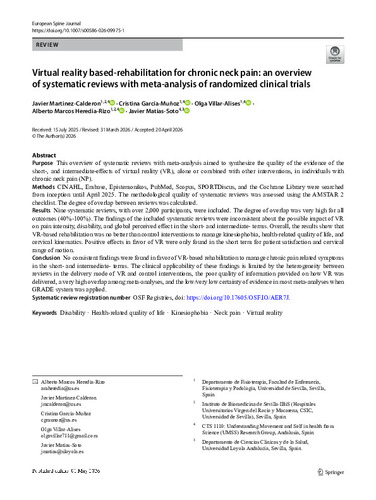
Purpose This overview of systematic reviews with meta-analysis aimed to synthesize the quality of the evidence of the short-, and intermediate-effects of virtual reality (VR), alone or combined with other interventions, in individuals with chronic neck pain (NP). Methods CINAHL, Embase, Epistemonikos, PubMed, Scopus, SPORTDiscus, and the Cochrane Library were searched from inception until April 2025. The methodological quality of systematic reviews was assessed using the AMSTAR 2 checklist. The degree of overlap between reviews was calculated. Results Nine systematic reviews, with over 2,000 participants, were included. The degree of overlap was very high for all outcomes (40%-100%). The findings of the included systematic reviews were inconsistent about the possible impact of VR on pain intensity, disability, and global perceived effect in the short- and intermediate- terms. Overall, the results show that VR-based rehabilitation was no better than control interventions to manage kinesiophobia, health-related quality of life, and cervical kinematics. Positive effects in favor of VR were only found in the short term for patient satisfaction and cervical range of motion. Conclusion No consistent findings were found in favor of VR-based rehabilitation to manage chronic pain related symptoms in the short- and intermediate- terms. The clinical applicability of these findings is limited by the heterogeneity between reviews in the delivery mode of VR and control interventions, the poor quality of information provided on how VR was delivered, a very high overlap among meta-analyses, and the low/very low certainty of evidence in most meta-analyses when GRADE system was applied.
Collections
Files in this item
Share

Statistics
